
Lulu Publishing Review: What It’s Actually Like to Publish There
Lulu has been around since 2002, and by 2014 had already issued roughly two million titles, which makes it one of the older names in self-publishing rather than a newer entrant chasing the same wave as everyone else.
That history matters here, because Lulu wasn’t built around the current generation of AI-assisted publishing tools. It was built around a simpler idea: give authors free access to print-on-demand and distribution, and let them handle everything else themselves.
Whether that’s a good deal depends entirely on what “everything else” means to you.
Quick Take
Where Lulu genuinely delivers:
- Free to create an account, upload a manuscript, and list a book for sale
- Authors keep 80% of print profit and 90% of ebook profit after production costs
- No minimum print run, order one copy or a thousand
- Authors retain full rights to their own work
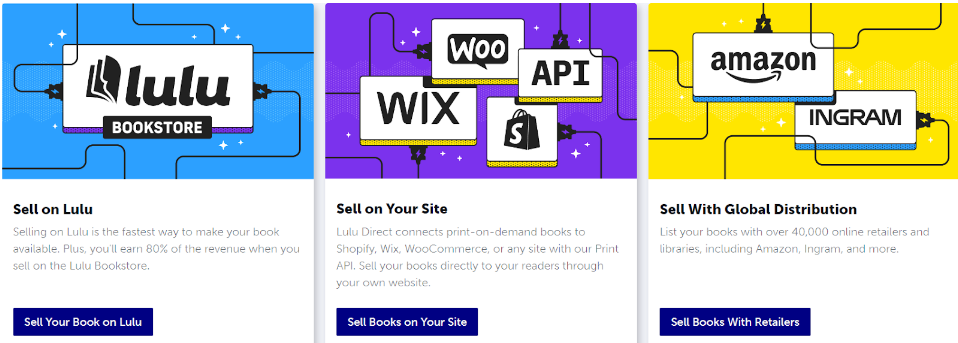
- Global distribution to Amazon, Barnes & Noble, and other major retailers
Where it falls short:
- Only basic tools for formatting and cover design, no real production services
- No editing or proofreading support
- No marketing services beyond a store listing
- The free ISBN option makes Lulu the publisher of record on your book, permanently
- No copyright page or formal copyright registration included
- A real learning curve for authors who haven’t self-published before
- Inconsistent print quality reported by some authors
- Limited presence in physical bookstores, since print-on-demand economics make bulk shelf stocking hard to justify for retailers
What You’re Actually Getting
Lulu is a toolkit, not a service. It gives authors the software to format a manuscript, design a cover, convert to ebook formats, and push the finished file out to major retailers, all without an upfront cost. What it doesn’t give you is anyone doing that work for you.
Editing, proofreading, professional cover design, and marketing are either absent entirely or available only as narrow, self-directed add-ons you have to seek out and manage yourself.
That’s a fine trade if you already know how to prepare a manuscript for publication, or if you’re working with your own editor and designer outside the platform. It’s a much harder trade if you’re publishing for the first time and expected a guided process.
The platform’s own support resources, help articles, video tutorials, and a support team for troubleshooting, are genuinely useful, but they teach you how to do the work, they don’t do it for you.

The Ownership Question Nobody Asks Until Later
Buried in Lulu’s own help center is a detail that’s easy to miss during signup and expensive to discover after the fact. If you use Lulu’s free ISBN rather than buying your own, Lulu itself becomes the publisher of record in your book’s official metadata, the name that shows up in library catalogs, in Books in Print, and on a retailer’s book detail page when someone looks up the ISBN.
Lulu says as much directly in its own documentation: choosing the free ISBN “identifies the Imprint of your book as Lulu and cannot be changed.”
That’s a non-issue if you don’t care who’s listed as the publisher. It’s a bigger deal if you’re trying to build an author brand or your own imprint, since the free option can’t be swapped out later, and it can’t be transferred if you ever move the book to a different platform or publisher down the line.
The workaround is buying your own ISBN separately, generally around $125 for a single one or $295 for a block of ten through Bowker in the US, a cost that doesn’t show up anywhere in the “free to publish” pitch.
There’s a second detail nearby worth knowing. Lulu doesn’t insert a copyright page into your book, that’s on you to write and format yourself, and Lulu’s help documentation confirms they don’t register your copyright with the Library of Congress or any copyright office.
You own the rights to your own writing automatically the moment you write it, that much is true everywhere, but a formally registered copyright is a separate legal step, and it isn’t something Lulu handles as part of the process.
None of this is hidden, exactly. It’s sitting in Lulu’s own knowledge base for anyone who goes looking. It’s just easy to miss when the sign-up flow is emphasizing “free,” and it’s the kind of thing better known on day one than discovered after a book’s already listed under a name you didn’t choose.


How Lulu Actually Pays You
Lulu’s royalty math is more specific than “keep 80%,” and worth understanding before you set a retail price. The formula is profit equals sale price minus production costs minus Lulu’s commission, and that commission runs 20% on print books and 10% on ebooks, which is where the 80%/90% figures come from.
There’s also a fee that doesn’t show up in that headline number at all: enrolling a title in Global Distribution for the first time carries a one-time, non-refundable $4.99 charge, separate from ongoing print costs.
The number that reaches your account depends heavily on your own choices: page count and paper type both affect production cost, and selling through Lulu’s own store keeps more of the sale in your pocket than selling through Amazon or Barnes & Noble, since those retailers apply their own margin, typically 30% to 55% of the retail price, before Lulu’s commission is even calculated.
A book that nets a healthy royalty sold direct through Lulu can net meaningfully less once it’s sold through a third-party retailer, which is worth factoring in if most of your sales are likely to happen off-platform. Selling directly from your own website through the Lulu Direct integration carries its own flat fulfillment fee too, $1.75 per order as of Lulu’s published rate, on top of print cost.
Timeline: Two Different Speeds
Getting a book listed and ready to print on Lulu itself can happen within days once your files are formatted correctly. Getting that same book into full retail availability through Global Distribution, listed on Amazon, Barnes & Noble, and picked up by Ingram for bookstore and library ordering, takes considerably longer: Lulu’s own documentation puts it at approximately 12 weeks or longer, not the six-to-eight-week figure that gets repeated across most comparison content.
That shorter number actually describes something else entirely, how long it takes for a completed sale to be credited to your account after a customer buys the book, not how long distribution approval itself takes. It’s an easy mix-up, and one that can throw off a launch timeline if you’re planning around the wrong number.
The practical takeaway is that “publishing on Lulu” and “having your book available everywhere” are two different milestones with two very different timelines, and it’s worth planning your launch date around the longer one, not the shorter one.
The Distribution Network You’re Actually Using
Lulu’s Global Distribution service doesn’t run on infrastructure Lulu built itself. Lulu’s own help documentation names the partner directly: Lightning Source, a division of Ingram Content Group, the same company behind IngramSpark.
Practically, that means Lulu and IngramSpark aren’t two fully separate distribution options, they’re two different front doors onto a lot of the same wholesale network.
This matters for a specific, common mistake. An author already using IngramSpark for bookstore and library distribution who also enables Lulu’s Global Distribution on the same title isn’t gaining extra reach, they’re creating a duplicate listing for the same book, generally requiring a second ISBN, and splitting reviews and sales history across two records instead of consolidating them under one.
This exact warning shows up on independent author forums from people who found out after the fact, and it’s not something most comparison articles explain, since it requires knowing how the distribution backend actually works rather than just comparing feature lists.
If you’re only using one of the two, this doesn’t affect you. If you’re weighing both, or already have a book on IngramSpark and are wondering whether adding Lulu’s distribution would help, the honest answer is that it likely won’t, and could create more administrative overhead than it’s worth.
Customer Reviews: Better Than the Reputation Suggests
Lulu currently holds a 4.4 out of 5 on Trustpilot, rated “Excellent,” from over 6,300 reviews, a meaningfully stronger position than the mixed reputation that circulates in older comparison content.
Trustpilot’s own summary of recent reviews describes customers overwhelmingly having a positive experience, specifically praising how straightforward the publishing process is and how consistently good the final print quality turns out. The formatting templates and ease of use come up often as reasons people return for a second or third book.
The complaints that do show up are more specific than “the platform is bad.” Some authors mention friction with cover design formatting or image resolution requirements.
Others report occasional print flaws, slightly blurry text or unexpected white space at the edges of a page, and a smaller number mention that distribution timelines or support communication could be clearer.
That lines up with the print-defect account described above: not evidence of a broadly unreliable service, but a real, occasional failure mode worth knowing about before ordering copies for something time-sensitive like an event.
One account worth knowing about turned up in a writers’ discussion forum rather than a review site, which makes it more credible than most: an author described receiving a printed copy with a clear manufacturing defect, text bleeding off the bottom of the page, a blank margin at the top, the kind of thing that’s obviously the printer’s fault rather than the file.
Lulu’s resolution wasn’t a refund or a reprint of the defective copy. It was a discount on a future purchase. That’s a useful thing to know before you order author copies for an event or a launch: if a print run comes out wrong, the recourse may be more limited than you’d expect from a company handling physical production.

Is Lulu Publishing for You?
Lulu fits an author who already has a polished, print-ready manuscript, a finished cover, and a plan for how they’ll market the book themselves.
If you have those pieces in place, or the skills to produce them independently, Lulu’s free entry point and higher royalty percentage genuinely reward that self-sufficiency.
It’s a harder fit if you’re publishing for the first time and were hoping for guidance rather than tools.
No editing support, no cover design service, and no marketing help means you’re either learning three new skills at once or hiring freelancers separately to cover what the platform doesn’t, and either path adds real time and cost that the “free to use” framing doesn’t capture on its own.
For the most up-to-date information on services, pricing, and publishing timelines, it’s crucial to visit Lulu’s website directly.
Best Alternative to Lulu Publishing…
For authors seeking a self-publishing alternative that delivers exceptional value, Spines stands out. Spines provides a self-publishing platform that integrates advanced technology with human expertise, supporting eBooks, audiobooks, and print-on-demand formats. It offers global distribution, marketing tools, and 100% royalty retention, with three pricing packages and a monthly payment plan. Read our in-depth review here to find out more.
FAQ: Lulu Publishing
Q: Is Lulu a completely free service?
No. Lulu offers a free self-publishing platform, but publishing with Lulu is not entirely free in every situation.
Authors can upload their manuscript, create a book, and list it for sale without paying an upfront publishing fee. Lulu uses a print-on-demand model, meaning books are printed only when someone places an order.
However, there are costs authors should consider. These can include:
Printing costs, which are deducted from the retail price of each book sold
Distribution fees if the author wants the book available through retailers such as Amazon or Barnes & Noble
Optional professional services, such as editing, cover design, or formatting
In practice, many authors can publish a book on Lulu without paying upfront, but the platform earns revenue through printing, distribution services, and optional publishing assistance.
Q: Are there any deductions from my earnings with Lulu?
Yes. Lulu deducts certain costs before calculating the author’s final earnings.
When a book is sold, the author’s revenue is generally calculated after subtracting:
Printing costs, which depend on the book’s page count, format, and paper type
Retailer discounts, if the book is sold through external stores such as Amazon or Barnes & Noble
Distribution fees associated with Lulu’s global distribution network
For example, when a book sells through Lulu’s own bookstore, the author typically keeps a larger portion of the sale price because fewer third-party fees are involved. When the same book sells through external retailers, those stores take their standard retail margin before royalties are calculated.
Because these costs vary depending on the book format and distribution channel.
Q: How does Lulu pay authors?
When a book sells, Lulu calculates the author’s earnings based on the book’s retail price minus printing costs and any applicable retailer or distribution fees. The remaining amount becomes the author’s royalty.
Authors can track their sales and royalties through their Lulu dashboard. Payments are typically issued monthly, once earnings reach the platform’s minimum payout threshold.
Lulu generally processes payments through common digital payment methods such as PayPal or direct deposit, depending on the author’s location and account settings.
Because retailers report sales on a delay, royalties from third-party stores may appear in the dashboard several weeks after the sale occurs.
Q: What publishing services does Lulu offer?
Lulu provides a range of tools and services designed to help authors publish and distribute books independently.
At its core, Lulu offers a self-publishing platform with print-on-demand production. This allows authors to upload their manuscript, design their book files, and make the book available for sale without ordering large print runs.
The platform typically includes tools for:
Book formatting and file preparation
Print-on-demand book production
ISBN assignment
Global distribution to online retailers
Sales tracking and royalty reporting
In addition to its core publishing tools, Lulu also offers optional professional services such as cover design, editing, marketing assistance, and formatting support for authors who want additional help preparing their book for publication.
This combination of publishing software and optional services makes Lulu a common choice for authors who want to maintain control over their book while using a platform to handle printing and distribution.
Q: Is Lulu publishing legitimate?
Yes. Lulu is a legitimate self-publishing platform that has been operating since 2002. The company was founded in Raleigh, North Carolina and provides print-on-demand publishing tools for independent authors, businesses, and organizations.
Over the years, Lulu has become one of the more established platforms in the self-publishing space, allowing authors to create books, print them on demand, and distribute them through online retailers and bookstores. The platform is widely used by independent writers, educators, and small publishers who want to publish books without going through a traditional publishing house.
Like most self-publishing platforms, Lulu operates as a service provider rather than a traditional publisher. This means authors typically retain the copyright to their work and use Lulu’s tools for printing, distribution, and optional publishing services.
As with any publishing service, authors should review the platform’s pricing structure, distribution terms, and royalty calculations to ensure it aligns with their publishing goals.
Q: Is Lulu better than Amazon KDP?
Lulu and Amazon Kindle Direct Publishing (KDP) are both popular self-publishing platforms, but they serve slightly different purposes.
Amazon KDP is optimized for selling books on Amazon, which is the largest online bookstore in the world. Publishing directly through KDP usually provides the best availability and fastest shipping for books sold on Amazon.
Lulu, on the other hand, focuses more on print-on-demand publishing tools and distribution flexibility. Lulu is often used by authors who want additional control over printing options, direct sales, or distribution through Lulu’s network of retailers.
Many independent authors choose the platform based on their publishing goals:
Authors focused primarily on Amazon sales often prefer KDP.
Authors looking for flexible printing and alternative distribution options sometimes choose Lulu.
Some experienced self-publishers even use multiple platforms strategically, depending on where they want their books to be sold.
Ultimately, the best choice depends on the author’s priorities, including distribution reach, printing options, pricing structure, and how they plan to market their book.
Q: How much does it cost to publish a book with Lulu?
Publishing a book on Lulu can be free in terms of platform access, but the total cost depends on the services an author chooses.
Authors can upload their manuscript, format their book, and make it available for sale without paying an upfront publishing fee. Lulu uses a print-on-demand model, meaning books are only printed when someone orders them.
The main costs typically come from:
Printing costs, which depend on the book’s size, page count, and paper type
Distribution fees if the author wants the book listed on major retailers
Optional services such as editing, formatting, or cover design
Because these factors vary, the final earnings for each book depend on the retail price set by the author and the printing and distribution costs associated with that edition.